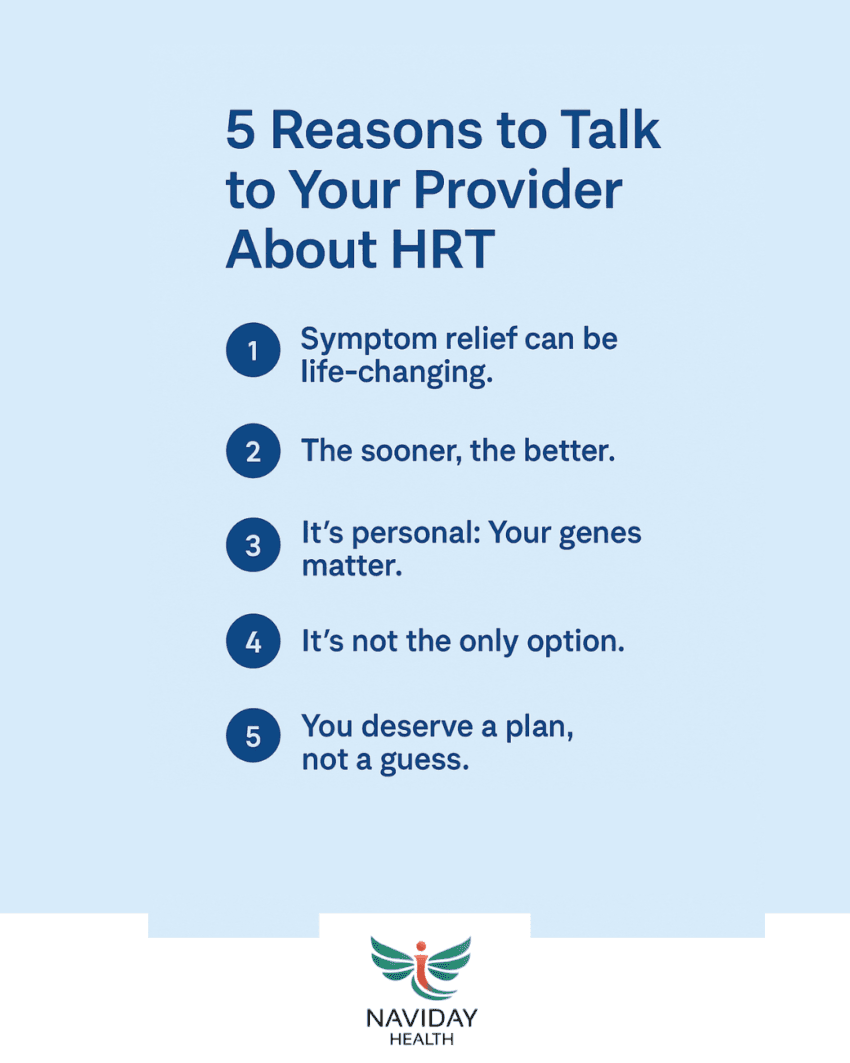
Okay, let's have the HRT conversation. Because if you've been dealing with hot flashes that wake you up drenched, brain fog that makes you forget why you walked into a room, or mood swings that feel like emotional whiplash—you've probably wondered: Is hormone therapy something I should think about?
The answer isn't simple. But here's what we know.
So What Even Is HRT?
Hormone Replacement Therapy (HRT) is exactly what it sounds like: giving your body the hormones it's making less of during perimenopause and menopause. Usually that means estrogen, sometimes progesterone too.
There are different ways to take it:
- Pills you swallow
- Patches you stick on your skin
- Gels or creams
- Vaginal options for localized symptoms
Some women use bioidentical hormones, which are made to match your body's natural hormones exactly. Your doctor can help figure out what type might work for you.
Who Might Benefit from HRT?
HRT is usually considered for women who are dealing with:
- Hot flashes and night sweats that won't quit
- Brain fog and memory issues
- Vaginal dryness that's affecting your life
- Mood swings, anxiety, or irritability
- Sleep problems that leave you exhausted
- Early signs of bone thinning
Research shows HRT works best when started before age 60 or within 10 years of entering menopause. That's considered the safest window.
The Results Can Be Real
Here's what modern studies are showing:
- HRT can reduce hot flashes and night sweats by up to 90%
- Many women report clearer thinking, better mood, and improved sleep
- When started at the right time, it often has a favorable safety profile
That's not nothing. For some women, it's life-changing.
But Here's the Thing: Your Genetics Matter
HRT isn't one-size-fits-all. Your body is unique, and so is how you process hormones.
Genetic testing can help figure out:
- How your body breaks down estrogen or progesterone
- Whether you have higher risks for certain conditions
- What type and dose might work best for YOU
This is why personalized care matters so much. What works for your friend might not be right for you.
A Story That Might Sound Familiar
A woman in her early 50s was struggling. Mood swings. Restless nights. Memory lapses that were starting to affect her work and her family. She felt like she was losing herself.
After talking with her provider about her symptoms and getting some lab work done, she started low-dose HRT along with some lifestyle changes.
Within weeks? Her sleep improved. Her clarity came back. She felt emotionally stable again. She felt like herself again.
That's what this can look like when it's the right fit.
What If HRT Isn't Right for You?
Not everyone can or wants to take hormones. And that's completely valid. Here are some alternatives that can help:
- Lion's Mane mushroom — Known for potential brain-boosting benefits
- Mindfulness and breathing exercises — Can reduce hot flash severity and stress
- Acupuncture and herbal therapies — Used in integrative approaches
- Exercise and nutrition — Critical for bone health, mood, and energy
The point isn't that you HAVE to do HRT. The point is knowing your options.
The Most Important Step? The Conversation
HRT is a tool. Not a requirement. Not a one-size-fits-all solution.
The most important thing isn't the prescription—it's having a real conversation with your provider. Ask questions. Share your symptoms. Use your data.
That's where LUCI comes in. When you track how you're feeling over time, you have real information to bring to that conversation. Not just "I think I've been having symptoms" but "here's exactly what's been happening."
Because the future of care isn't about guessing. It's about listening, testing, and finding what works for YOU.
You deserve care that's tailored to your body. And you deserve to make that decision with real information—not just hope.