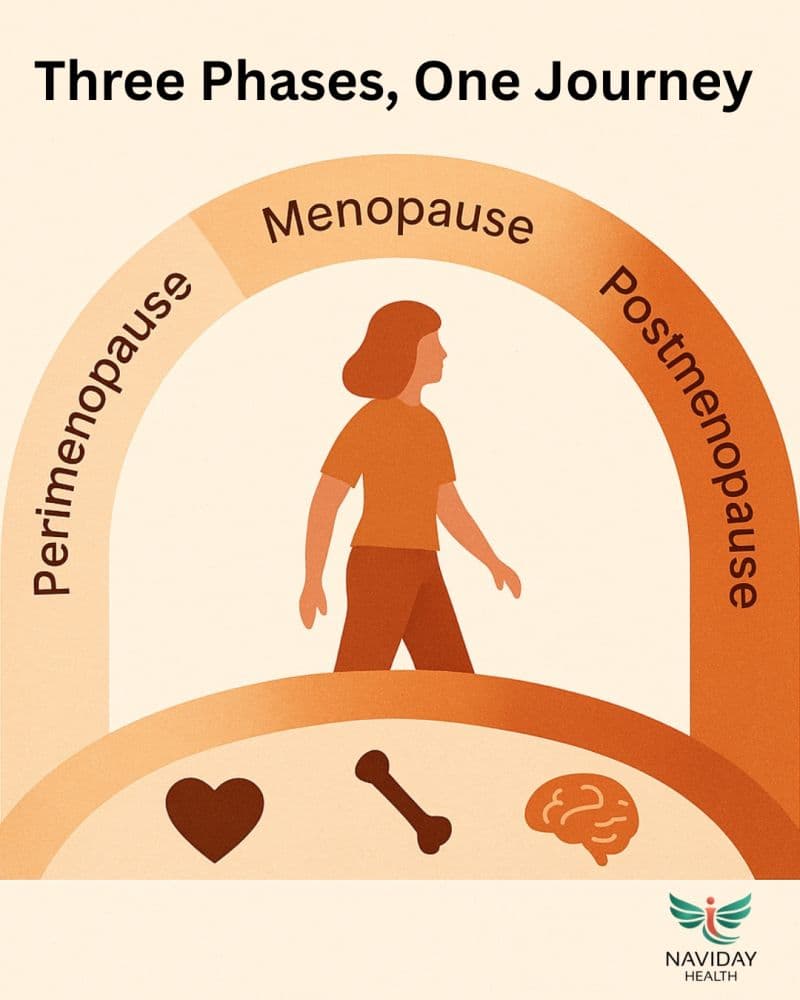
Have you ever noticed how we talk about menopause?
It's usually "perimenopause and menopause." That's it. Two words that are supposed to capture this massive life transition.
But here's the problem: there are actually three distinct phases. And by squishing them into two, we're erasing an entire stage of life—the longest one, actually.
Postmenopause just... disappears. Gets absorbed into "menopause" or forgotten entirely.
This isn't just about words. It's about how we get care.
When Language Gets Sloppy, Care Gets Sloppy
Here's what happens when we reduce three phases to two:
- Perimenopause gets attention for symptoms—hot flashes, mood swings, sleep issues
- Menopause is treated as "the main event"
- Postmenopause—where bone density declines, heart disease risk shoots up, and prevention still matters—gets overlooked
And the consequences? They're serious.
When perimenopause is only seen as "manage the discomfort" instead of "this is your window for prevention," we end up with higher rates of osteoporosis, fractures, and heart disease years later.
Problems that could have been prevented if we'd paid attention earlier.
The Three Phases—What They Actually Mean
Let's get clear on what we're really talking about:
Perimenopause
The transitional years leading up to your final period. Your hormones are shifting, which affects sleep, mood, metabolism, and even heart health.
This is the critical window for prevention. What you do here shapes your health for decades.
Menopause
Technically, it's just one moment—when you've gone 12 months without a period. It's not the end of anything. It's more like the midpoint of this whole transition.
Your hormone levels stabilize (at lower levels), but you still need attention and care.
Postmenopause
Everything after that. And here's the thing: this is the longest phase. It lasts the rest of your life.
Without estrogen's protective effects, your risks go up for:
- Osteoporosis and fractures
- Heart disease
- Cognitive changes
- Insulin resistance
This is when vigilance matters most—but it's the phase that gets the least attention.
Menopause Should Be Treated Like Chronic Care
Here's something medicine has been slow to accept: menopause isn't a one-time thing you "get through."
It's an ongoing health condition that deserves the same continuous care as diabetes or high blood pressure.
Think about it:
- Continuous prevention strategies
- Multiple specialists working together
- Long-term monitoring
- Adjusting care as things change
Your hot flashes might go away. But the physiological changes? They're still happening. And ignoring that leaves you unsupported at exactly the time when support matters most.
Why Better Language Leads to Better Care
The words we use shape the systems we build.
When "menopause" becomes a catch-all term, we lose the precision needed to actually help women. We lose the opportunity to protect long-term health.
But when we recognize all three phases—and what each one needs—we can:
- Catch prevention opportunities in perimenopause
- Provide proper support during the menopause transition
- Continue protecting health throughout postmenopause
A Different Approach
At Naviday Health, we're working to change this narrative.
By being precise about how we talk about menopause—and how we treat it—we can connect what happens in perimenopause to how you feel and function in postmenopause.
This isn't a single transition you survive. It's a lifelong continuum of care that shapes how you live, age, and thrive.
You deserve language that sees you. And care that follows.